Underpinning contractors in Hingham, MA deal with a specific problem: a coastal town partly built on old wetland and reclaimed fill, where foundations settle differently than they do thirty miles inland. Get the diagnosis wrong and you pay for the fix twice, once for the wrong one and once for the right one. Here's what actually decides whether your home needs piers, bench footing, or just better drainage.
What Is Foundation Underpinning?
Underpinning extends the depth or width of an existing foundation so it rests on more stable soil or can carry more load. In plain terms, it's building a new, stronger foundation underneath the one that's already there, without the house falling down in the process.
Homeowners calling underpinning contractors in Hingham, MA usually fall into one of two groups: people dealing with real structural settlement, and people voluntarily deepening a foundation for a basement conversion or addition. Both need the same engineering rigor, just different urgency.
Warning Signs You May Need Underpinning
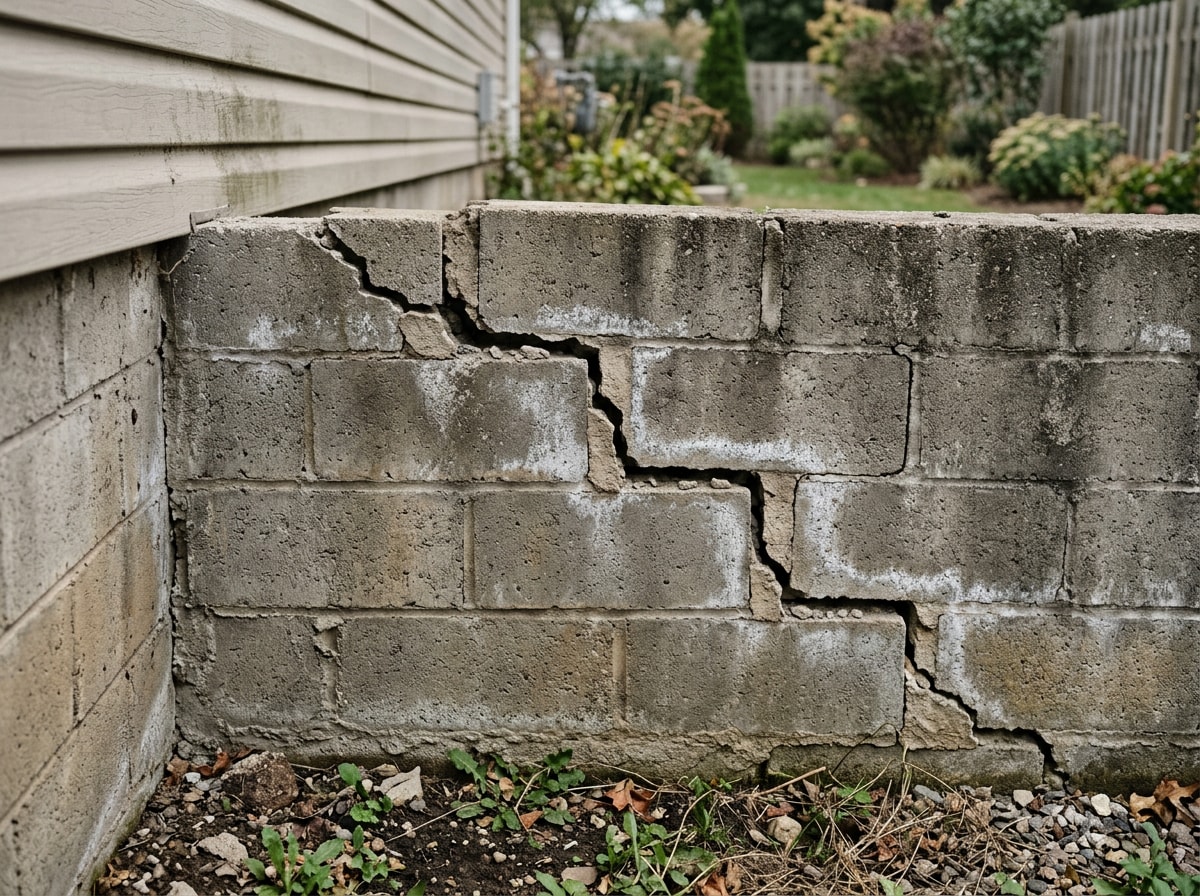
Watch for these indicators of genuine foundation movement, not normal seasonal shifting:
- Stair-step cracks in block or brick foundation walls
- Horizontal cracks running across a foundation wall
- Doors and windows that suddenly stick or won't latch
- Sloping or noticeably uneven floors
- Gaps opening between walls and ceilings
- A chimney pulling away from the house
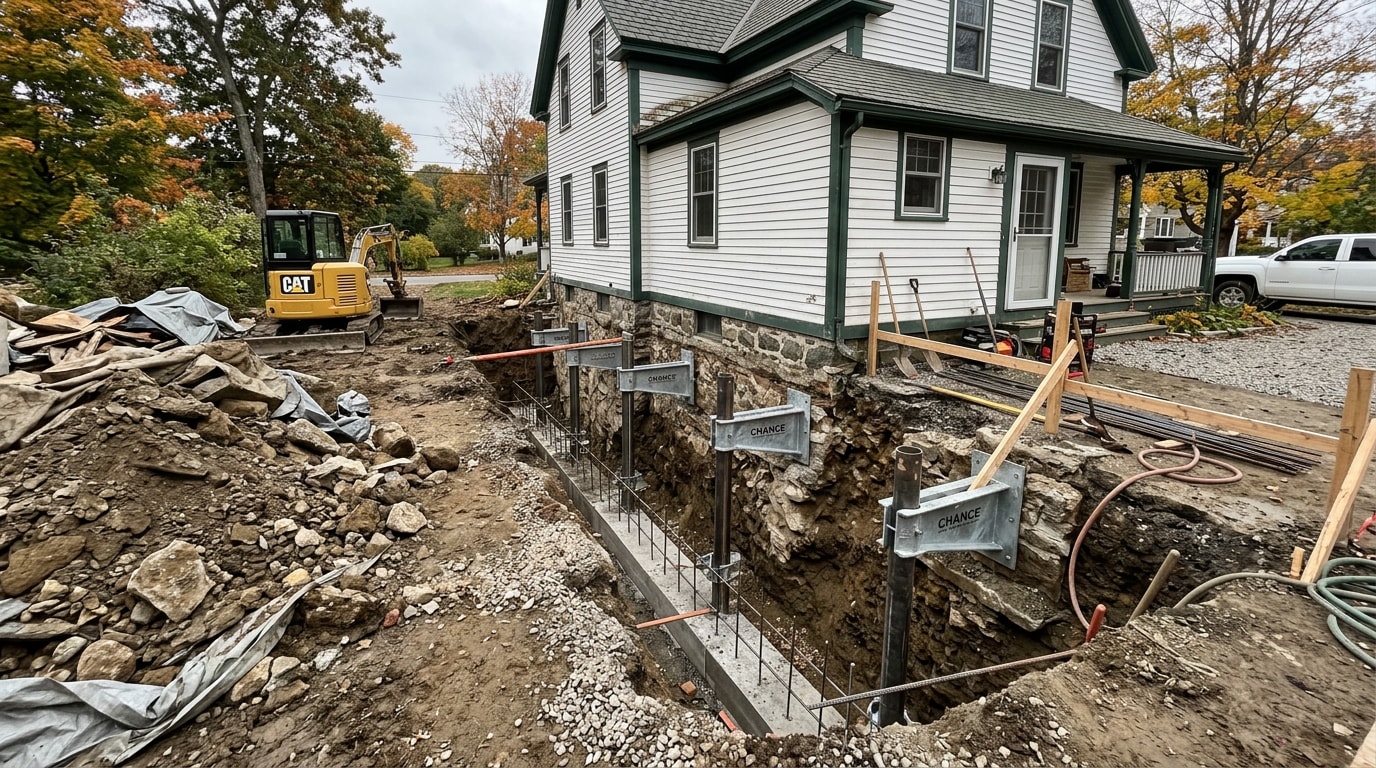
On a recent Hingham Harbor-area project, our crew opened up a foundation wall and found the original early-1900s rubble footing sitting almost directly on reclaimed fill near the water, a condition we see often in the older waterfront neighborhoods but rarely inland. That's exactly the soil situation helical piers are designed to bypass, since they're driven past the weak fill layer into load-bearing soil below it.
When Underpinning Is NOT the Answer
Not every crack signals a structural problem. A reputable underpinning contractor will sometimes recommend a cheaper fix, crack sealing or improved drainage, instead of underpinning when the damage is cosmetic. Honest assessment matters more than an upsell, and it's a fair question to ask any contractor who quotes piers before even inspecting the inside of the basement.
Underpinning Methods We Use
Two methods handle most residential settlement repairs in Hingham:
- Helical piers are screw piles driven to load-bearing soil beneath the foundation, then connected with brackets that transfer the structure's load onto them.
- Push piers are hydraulically driven steel piles that use the building's own weight as resistance, then lock to the foundation.
Both methods are permanent, cause minimal site disruption, and typically install in two to five days for most homes. Helical pile systems used for residential foundation repair are also evaluated against a national engineering standard. The purpose of that acceptance criteria is to establish requirements for helical pile systems and devices to be evaluated in ICC Evaluation Service evaluation reports under the International Building Code. Ask any contractor quoting helical piers which manufacturer's ICC-ES evaluation report their piles carry.
Basement Lowering: Bench Footing vs. Full Underpinning
Basement lowering, also called bench footing or underpin-and-dig, converts a low-clearance basement into full-height living space. Existing footings get underpinned in stages, then crews excavate beneath the slab to reach the target floor elevation.
| Method | Typical Cost | Timeline | Headroom Gained | Disruption |
|---|---|---|---|---|
| Pier underpinning (settlement repair) | $1,500–$3,000/pier | 3–7 days | None (stabilization only) | Low |
| Full underpinning (basement lowering) | $350–$600+/linear ft | 3–8 weeks | 12–24+ inches | High |
| Bench footing | $200–$350/linear ft | 2–5 weeks | 6–12 inches | Moderate |
What Foundation Underpinning Costs in Massachusetts (2026)
Underpinning is priced by the linear foot of wall treated or by the pier, depending on method. Homeowners comparing underpinning contractors in Hingham, MA in 2026 should expect these ranges:
| Method | 2026 Price Range | Typical Project Total |
|---|---|---|
| Helical/push pier (per pier) | $1,500–$3,000 | $10,000–$31,000 (6–15 piers) |
| Mass concrete underpinning (per linear ft) | $250–$450 | Varies by wall length |
| Basement lowering (per linear ft) | $350–$600+ | Plus slab, waterproofing, disposal |
On the South Shore, limited excavation access on tight lots, high water tables near the harbor, rocky glacial till, and old rubble foundations all push costs toward the higher end of these ranges. That's based on what we've bid across dozens of South Shore foundation projects, not a national average.
Permits, Engineering & the Massachusetts Building Code
This isn't DIY-able work, and no legitimate contractor will tell you otherwise.
Engineering. Underpinning is structural work governed by the Massachusetts State Building Code (780 CMR). A stamped structural plan from a Massachusetts-licensed Professional Engineer is required before work begins.
Excavation law. Any digging below grade triggers Dig Safe. The law requires that you call Dig Safe any time you're going to perform an excavation, and an excavation includes movement or removal of earth, rock, or materials in the ground.
You must contact Dig Safe at least 72 business hours in advance of when you plan to excavate, not counting Saturdays, Sundays, or holidays.
Local permitting. The Hingham Building Department is responsible for administration and enforcement of the Massachusetts State Building Code, Electrical, Plumbing and Architectural Access Codes, the Hingham Zoning By-Law and General By-Laws of the town. Foundation work in particular triggers a formal inspection step before backfill, so don't let a crew cover the footing before the town has signed off.
Licensing to Verify Before You Sign
Two separate credentials matter, and they are not interchangeable. All contractors, partnerships, and corporations that solicit, bid on, or perform residential contracting on an existing one to four unit owner-occupied property in Massachusetts must be registered as a Home Improvement Contractor, and an HIC Registration is different from a Construction Supervisor License.
- HIC registration confirms the business is registered with the state's consumer protection program.
- CSL (Construction Supervisor License) confirms the supervisor passed a code-knowledge exam and can legally oversee structural, permit-triggering work.
Ask to see both before signing a contract, and verify them independently rather than taking a business card's word for it.
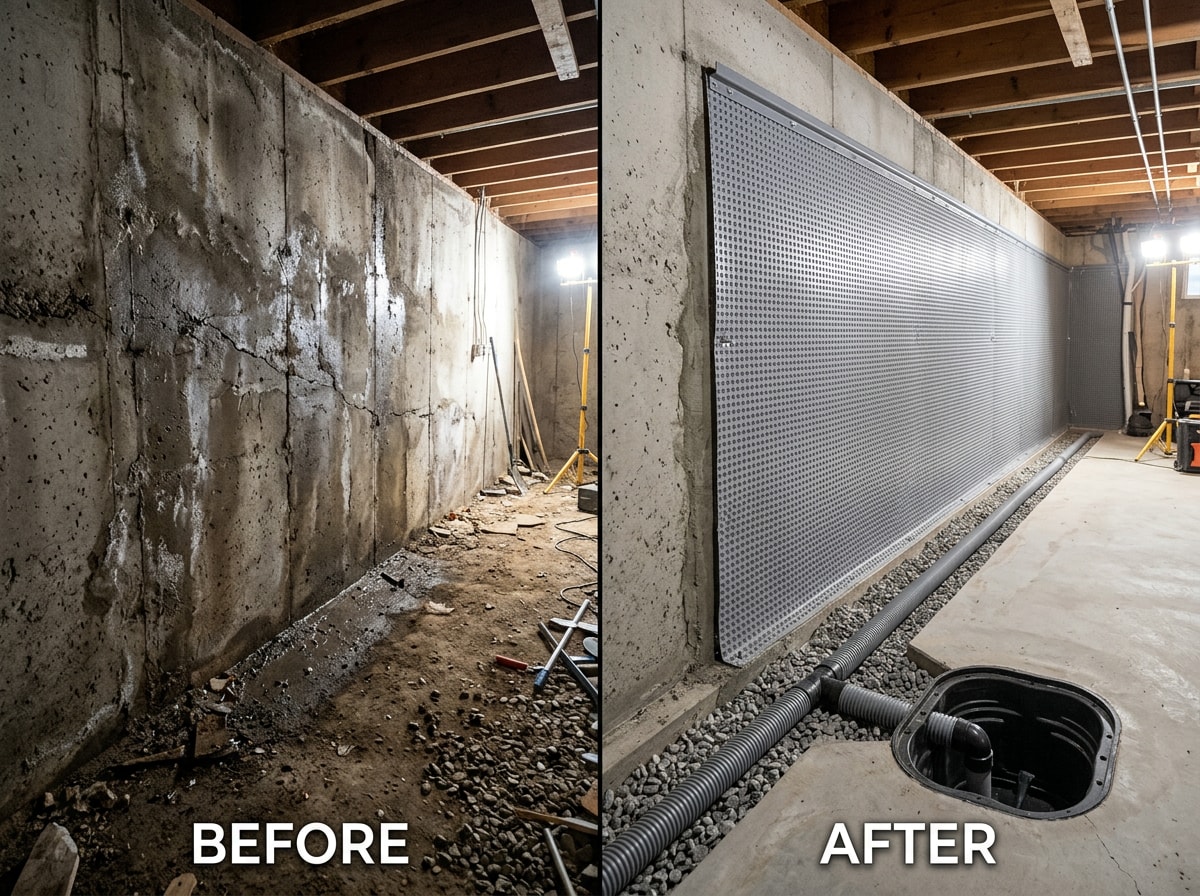
Underpinning & Waterproofing Scope
A full-service underpinning and waterproofing project usually covers more than structural work alone. Expect:
- An interior perimeter French drain below slab level
- A sump basin and pump with battery backup
- A dimpled drainage membrane on the walls
- Crack injection at active water-entry points before the system goes in
As a coastal town, Hingham properties see this pairing often. A stabilized foundation that still leaks hasn't solved the whole problem, and tackling both in one mobilization saves a second round of excavation later. If moisture problems extend above grade, it's worth having your siding inspected at the same time, since water intrusion at the foundation and at wall penetrations often share a root cause.
Related Work Underpinning Crews Often Coordinate
Underpinning contractors get called in for more than settlement repair. Related scopes that frequently come up on the same job:
- New foundation construction for additions, garages, and full rebuilds, built with reinforced concrete and proper drainage from day one.
- Masonry repair, since older Hingham homes often need chimney repointing or mortar repair once foundation work opens up the structure.
- Utility awareness, since Dig Safe's 72-hour notice also protects buried septic lines. If excavation is anywhere near a tank or leach field, a quick septic system inspection before digging avoids an expensive surprise.
If you're planning a larger project, our guide to ADU builders in Hingham, MA covers the zoning and permitting overlap between new foundation work and accessory dwelling units in the same town.
From the Field
Recent underpinning and South Shore foundation work speaks louder than any description. Browse our project gallery for before-and-after photos from homes near Hingham, or visit the Javelyn Built homepage to see our full range of services.
Areas We Serve Near Hingham
Beyond Hingham, our crews regularly work in Cohasset, Norwell, Scituate, Duxbury, Kingston, Marshfield, and Cape Cod, all of which share similar glacial soil and coastal drainage conditions.
FAQ
How Much Does Foundation Underpinning Cost in Massachusetts?
Foundation underpinning in Massachusetts typically costs $10,000–$31,000 depending on the number of piers required and the depth to load-bearing soil. Larger basement-lowering projects run higher.
Do I Need a Permit for Foundation Underpinning?
Yes. Foundation underpinning requires a building permit, and in Hingham, inspections are required before backfill, not just at the end of the job.
How Long Does Underpinning Take?
Pier-based settlement correction typically takes three to seven days. Full basement-lowering projects take several weeks from start to finish.
How Do I Know If My House Needs Underpinning?
Look for stair-step or horizontal foundation cracks, sticking doors and windows, sloping floors, or a chimney separating from the house. A contractor should inspect in person before recommending piers, since drainage fixes solve some of these symptoms without structural work.
What Is the Cheapest Method of Underpinning?
Mass concrete underpinning, priced per linear foot, is usually less expensive per foot than full basement lowering, but helical or push piers are often the lowest total cost for localized settlement repair since they don't require full excavation.
Can I Stay in My Home During Underpinning Work?
For pier-based settlement repair, yes, most homeowners stay in the house. Full basement lowering involves heavier excavation and dust, and many homeowners choose to limit use of that level during active work.
Can I Sell My House With a Foundation Problem?
Yes. Permitted, documented repair work tends to protect resale value rather than hurt it, since buyers and lenders see proof the issue was corrected properly.
Ready to find out what your foundation actually needs? Get a free structural estimate from Javelyn Built before you commit to a repair method.