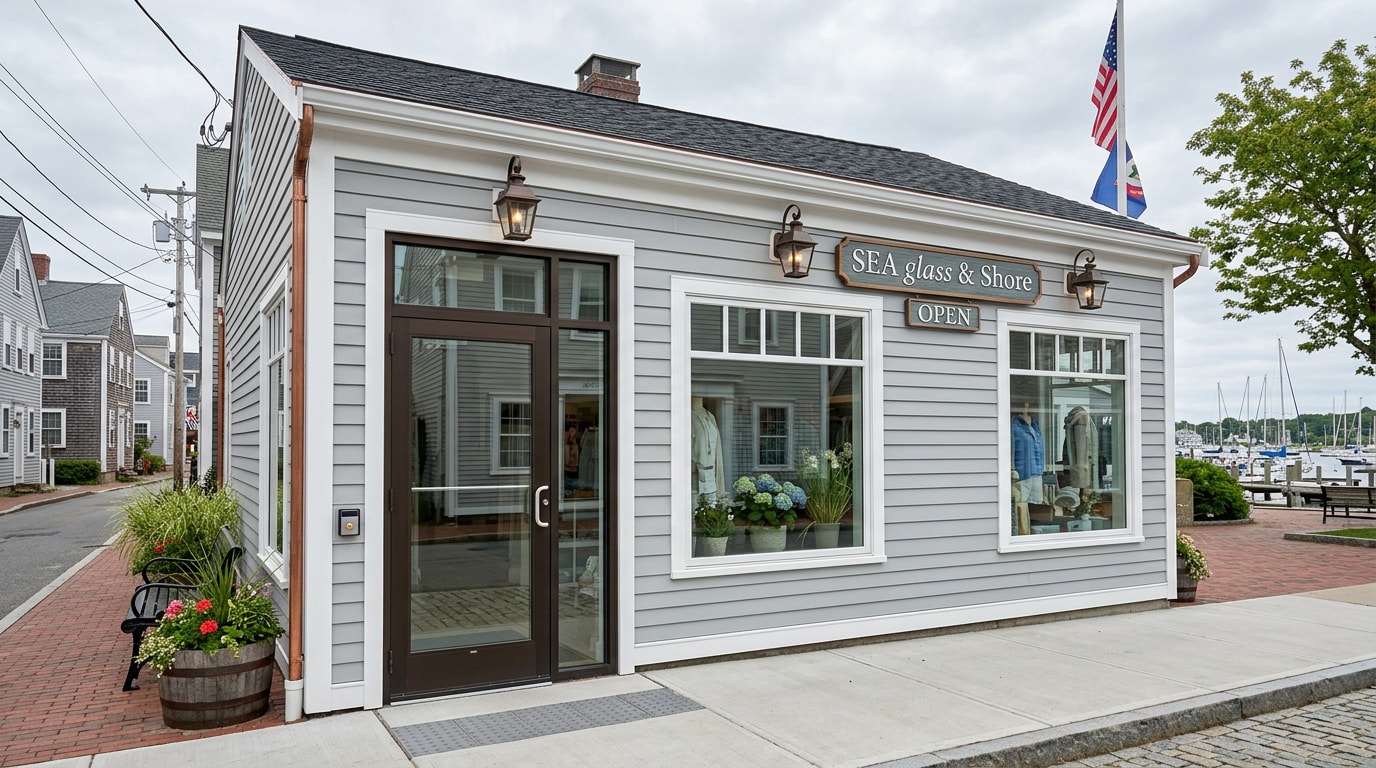
Retail contractors in Scituate, MA need to juggle three things at once: your brand, coastal building stress, and a permitting process that runs through three different business zoning districts. Get any one of those wrong and you're looking at change orders or a stop-work order from the building department. Here's what a build-out, remodel, or exterior upgrade actually involves in this town, plus how to vet the contractor before you sign anything.
What a Retail Contractor in Scituate Actually Builds
"Retail contractor" covers a wider range of work than most owners expect. On the South Shore, that typically includes:
- Ground-up build-outs inside new or vacant retail shells
- Full storefront remodels (layout, fixtures, finishes)
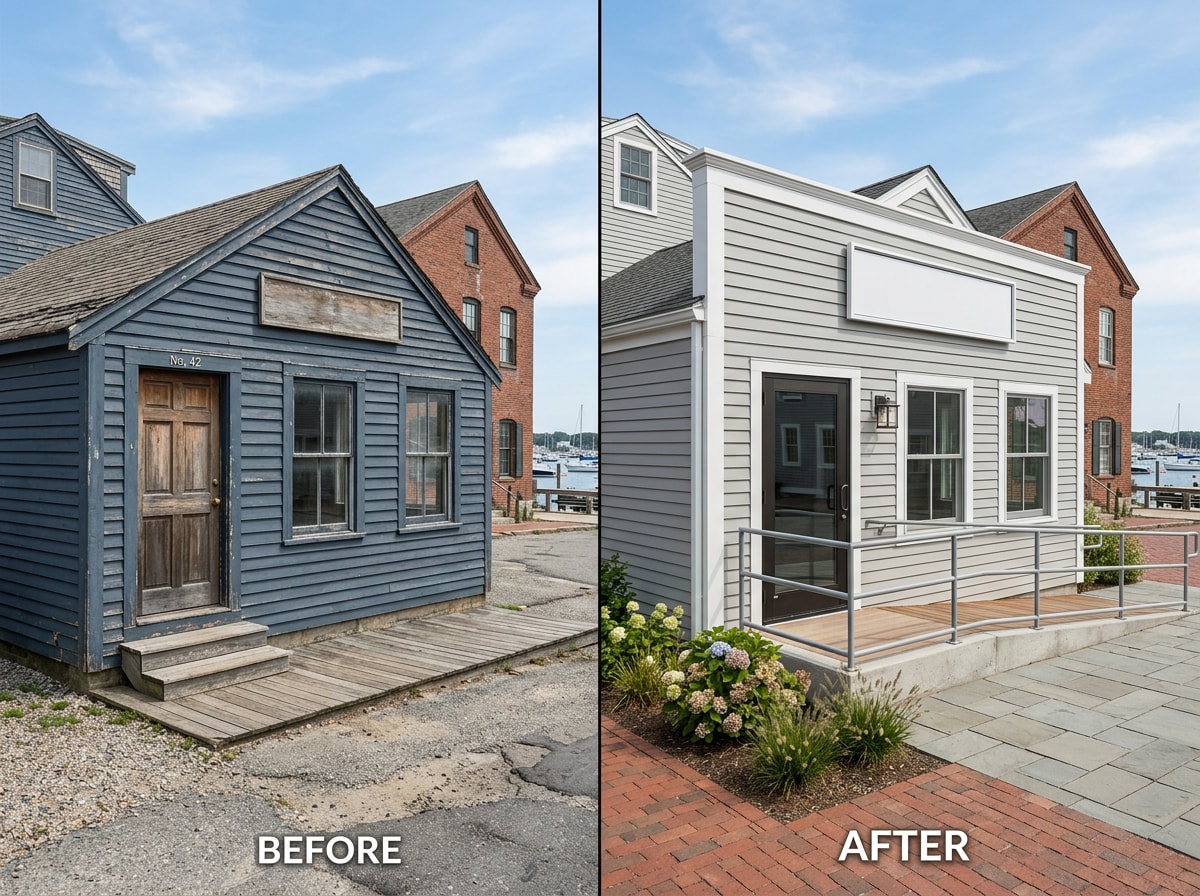
- Facade and exterior renovations, including ADA-compliant entries
- Tenant fit-outs inside existing retail plazas or Harbor Village buildings
- Code-driven upgrades: electrical, plumbing, fire sub-code, accessibility
A general residential remodeler and a retail contractor aren't interchangeable. Retail work has to account for customer flow, fire code occupancy loads, and (often) a landlord's lease requirements on top of the usual building code. If you're also weighing a larger commercial renovation nearby, Commercial Renovation Contractors in Cohasset, MA walks through how that process plays out on a bigger scope.
Designing Around Your Brand, Not a Template
A contractor who starts with a generic floor plan is going to cost you money later. The better approach is collaborative: layout, lighting, and finish selections get shaped around how your business actually operates, not just how a rendering looks.
This matters whether you're:
- Opening a first location from a bare shell
- Expanding square footage into an adjacent unit
- Running a storefront remodel to refresh an aging space
Your retail design should reflect your actual foot-traffic patterns, checkout flow, and product display needs. A contractor who treats your homepage pitch and your actual floor plan as two different conversations is the wrong contractor.
What's Included in a Retail Remodel
A full remodel scope typically covers:
- Layout changes and demising wall work
- Store fixtures, millwork, and custom displays
- Storefront and accent lighting
- Flooring (retail-grade, high-traffic rated)
- ADA-compliant checkout counters and entry routes
- Electrical, plumbing, or HVAC updates as needed
Lighting and HVAC choices affect your operating costs long after the contractor leaves. An average commercial building can save up to 30 percent on energy bills through no-cost actions, strategic investment, and smart operations and maintenance , according to ENERGY STAR's small business program. That's a real number worth asking your contractor about during fixture selection, not an afterthought once the store is open.
Why the Exterior Build Matters More in Scituate
Your facade is the first thing a customer sees, usually before they've decided whether to walk in. A well-built exterior drives foot traffic and sets the tone for the brand before anyone touches a door handle.
Coastal exposure makes this harder here than it would be inland. Salt air, wind-driven rain, and freeze-thaw cycles all accelerate wear on cladding, trim, and entry doors faster than in a typical suburban strip mall. Materials and installation details that would hold up fine in Norwell or Walpole need extra attention on Front Street or Humarock.
A few specifics worth confirming with your contractor:
- Cladding rated for coastal moisture exposure (see our exterior cladding installation work for material options)
- Entry doors sized and hung correctly for accessibility; exterior door installation needs to account for both weatherproofing and clear-width code requirements
- Roof edges and awnings inspected for wind uplift risk before any facade work starts; a roof inspection is cheap insurance before a big exterior job
On accessible entries specifically, the federal standard is explicit about clearance. Door openings shall provide a clear width of 32 inches (815 mm) minimum , measured with the door open at 90 degrees. That's a hard number, not a guideline, and it's one of the first things an inspector checks on a retail entry.
Scituate Zoning: What Applies to a Retail Project
Scituate doesn't have a single commercial zone. There are three base business zoning districts and two overlay business zoning districts in Scituate providing for commercial, light industrial and mixed use development primarily in the areas of Scituate Harbor, Greenbush-Driftway, North Scituate Village, and Humarock Village . Which one your property sits in changes what you can build and how much review it takes.
| Zoning District | Where It Applies | What It Means for a Retail Build |
|---|---|---|
| Commercial (C) |
Greenbush area and along the Driftway
|
Uses allowed in the Business Districts such as retail establishments and professional offices are also allowed here
| Harbor Business (HB) | Scituate Harbor |
Provides for and encourages a higher density business and cultural center that is served by public parking and is pedestrian oriented
| Village Business Overlay (VBOD) |
Scituate Harbor, North Scituate, Greenbush
| Encourages mixed-use, pedestrian-friendly development with density incentives for small-scale businesses |
If your storefront sits inside the harbor area, there's one more layer worth knowing about: the Massachusetts Cultural Council designated Scituate Harbor as one of 30 cultural districts statewide in 2015 . That designation doesn't add permitting hurdles on its own, but it can open the door to design grants for storefronts in that stretch, something most contractors never mention because they don't track it.
Permits and Local Building Officials
Construction in Scituate falls under the Massachusetts State Building Code. The Board of Building Regulations and Standards monitors Massachusetts building codes and construction supervisor licensing , and local permits are pulled and inspected through the town's own building department and sub-code officials.
A typical retail build-out can also require:
- A separate sign permit for new or updated signage
- Fire sub-code review for sprinkler or alarm changes
- Health department review if the tenant serves food
- Landlord sign-off if the space is inside an occupied plaza
On a recent harbor-area storefront project, the fire sub-code review for an updated sprinkler layout added nearly two weeks to the schedule, something the tenant hadn't budgeted for because the general contractor quote only covered the build, not the review cycle. That's the kind of gap a retail-specific contractor should catch before you sign a lease timeline.
Permit turnaround varies by current review volume, so confirm timelines directly with the building department rather than assuming a neighboring town's pace applies here.
Typical Project Scope and Duration
| Project Type | Typical Scope | Typical Duration* |
|---|---|---|
| Light remodel | Fixtures, paint, flooring, lighting refresh | 1–2 weeks |
| Mid-size remodel | Layout change, ADA entry upgrade, electrical work | 3–5 weeks |
| Full build-out | Bare shell to finished store, all trades | 6–10+ weeks |
*General industry ranges. Actual timelines depend on scope, permitting review, and whether the space stays open during construction.
How to Vet a Retail Contractor Before You Hire
Ask every contractor these questions before signing anything:
- Are you licensed and insured in Massachusetts, and can you provide proof?
- Have you pulled permits with the Scituate Building Department before, and do you know which zoning district applies to this address?
- Have you built out a retail space specifically, not just residential remodels?
- Who handles fire sub-code and sign permit coordination, you or me?
- Can I see photos or references from a completed storefront project?
Check completed work before you commit. Our projects page shows recent exterior and interior builds across the South Shore, including the kind of coastal detailing a Scituate storefront needs.
Get a Free Estimate
If you're planning a storefront build-out, remodel, or exterior upgrade in Scituate, get a free estimate before you lock in a lease timeline or budget. We also work throughout Scituate, MA and the surrounding South Shore towns.
FAQ
How long does a retail exterior renovation take?
Smaller refurbishments typically run 1 to 2 weeks. Full remodels with layout changes or ADA entry work usually take 3 to 5 weeks, and full build-outs from a bare shell can run 6 to 10 weeks or more. Coastal scheduling and seasonal weather can shift any of these ranges.
Can work be completed while my store stays open?
Yes, on many projects. Phased construction with safety barriers lets a store stay open during interior work. Exterior facade work is harder to phase around customer access and usually requires at least partial closure.
Do I need a permit for a retail remodel in Scituate?
Yes, for almost all retail construction work. Depending on scope, that can mean a building permit, electrical and plumbing permits, a sign permit, and fire sub-code review. Which zoning district your address falls in (Commercial, General Business, or Harbor Business) can also affect what's allowed.
What's the difference between a residential contractor and a retail contractor?
A retail contractor builds around occupancy loads, fire code for public spaces, ADA-compliant customer areas, and often landlord lease requirements. A residential remodeler typically hasn't dealt with any of that.
What materials hold up best on a coastal Massachusetts storefront?
Fiber cement siding, steel panels, composite cladding, and energy-rated glazing are common choices because they resist coastal moisture and temperature swings better than standard residential-grade materials.
Javelyn Construction has served South Shore and Cape Cod property owners since 2008, with licensed crews handling roofing, siding, door, and exterior construction projects for homeowners and local businesses, License #CS 115364. For more on Massachusetts contractor licensing requirements, see the Board of Building Regulations and Standards.