
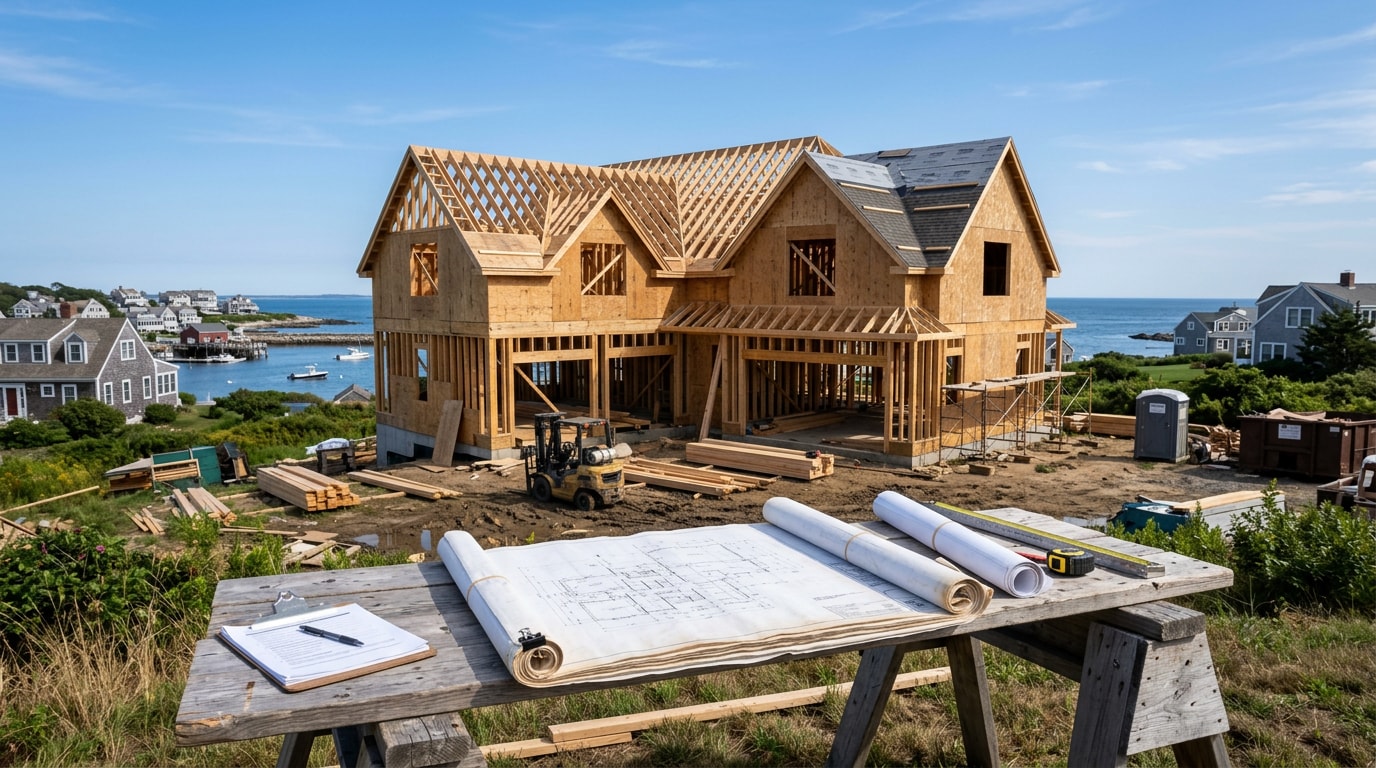
Construction administration in Kingston, MA is the architect's structured oversight of a project once construction documents are issued and crews break ground. It's the service that determines whether the building you get actually matches the one you approved on paper. Here's what it covers, who's accountable for each phase, and what to ask before you sign off on it.
What Is Construction Administration?
Construction administration is the architect's review of submittals, site conditions, RFIs, payment applications, and closeout documents after a project moves from design into the field. It protects design intent without replacing the contractor's day-to-day site management.
For a homeowner or developer in Kingston, the distinction matters. The architect isn't on site managing laborers or scheduling deliveries. They're verifying that what gets built reflects what was designed, and that field changes get documented instead of guessed at.
Contract administration services are rendered at the owner's discretion and begin with the initial contract for construction, terminating when the final certificate of payment is issued . That's a longer window than most owners expect going in, and understanding it up front sets realistic expectations about what your architect's role actually is once construction starts.
Construction Administration vs. Related Roles
These terms get used loosely on job sites, which causes confusion when contracts get signed. Here's how they actually break down:
| Role | Who Performs It | Primary Focus |
|---|---|---|
| Construction Administration | Architect of record | Verifying built work matches design intent |
| Construction Management | Construction manager | Scheduling, budget, subcontractor coordination |
| Clerk of the Works | Independent on-site clerk | Daily, full-time presence on behalf of the owner |
| General Contracting | General contractor | Means, methods, and day-to-day site execution |
The Architect's Role During Construction Administration
Once a project breaks ground, the architect's job shifts from producing drawings to protecting the integrity of those drawings in the field. That role unfolds in three phases.
Before Installation Begins
The architect reviews submittals and shop drawings against the construction documents to confirm specified materials match what's being proposed. This step catches mismatches before a product gets ordered or installed incorrectly.
Pre-construction coordination also means clarifying ambiguous details with the contractor before they become field problems. A short conversation here can prevent weeks of rework later.
During Construction
This is where most of the architect's visible work happens. Regular site visits let the architect observe progress and flag deviations before they get buried behind drywall or finishes.
Architects also respond to RFIs when field conditions don't match the drawings, or when a contractor needs clarification on intent. Reviewing payment applications is part of this phase too, since the architect typically certifies that the work billed reflects the work actually completed on site.
Completion and Handover
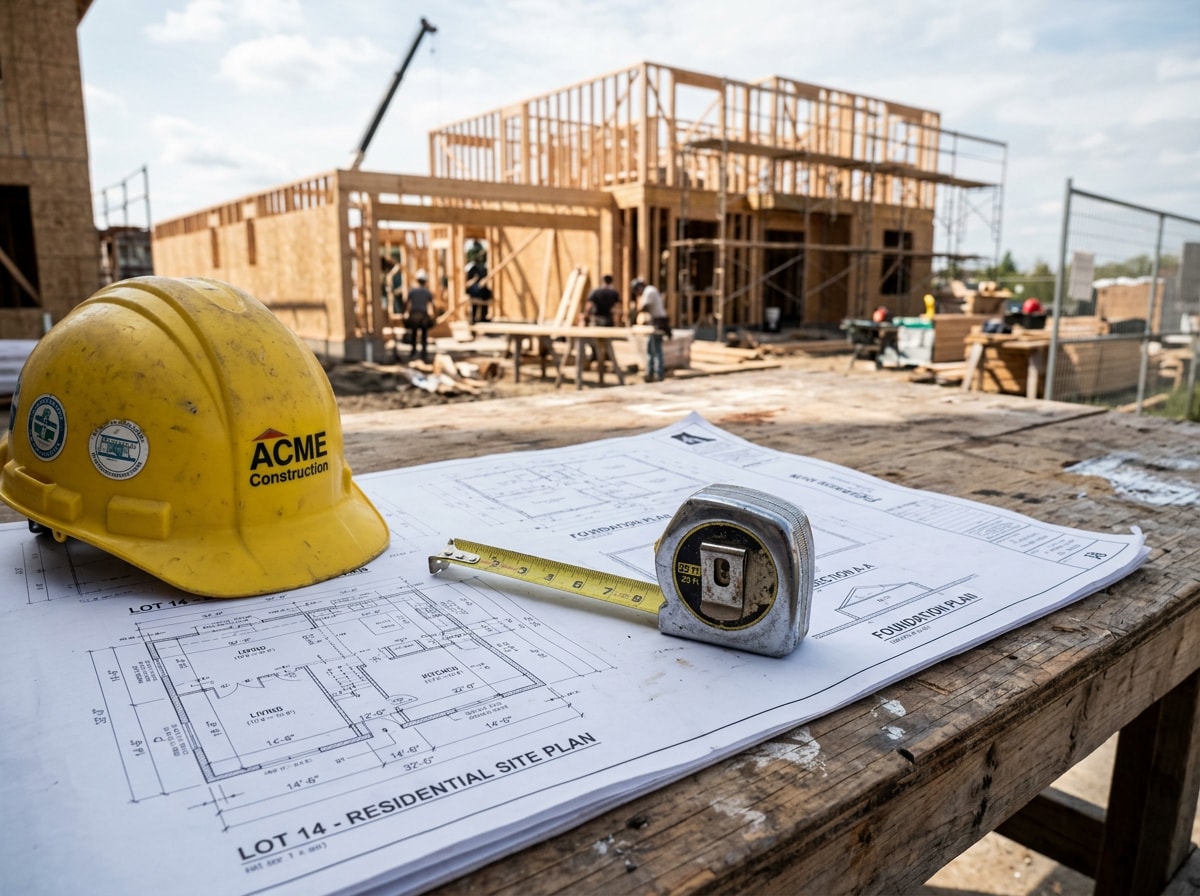
As the project nears the finish line, the architect compiles a punch list of outstanding items. Once the major items are resolved, the project reaches substantial completion, meaning the owner can occupy or use the space even if minor work remains.
Project closeout wraps things up: final inspections, warranty documentation, and the certificate that authorizes the last payment to the contractor. Skipping steps here tends to surface as warranty disputes months later.
Why Construction Administration Matters for Kingston Property Owners
Contractors are focused on schedule, cost, and buildability. That's their job, and it's a legitimate priority. But it means someone else needs to be watching for design intent.
That's the gap construction administration fills. The architect functions as something close to an owner advocate on site, independent of the pressure to cut corners for speed or cost. When a substitution gets proposed, the architect evaluates whether it still meets design intent, not just whether it's cheaper to install.
The construction administration fee is often the line item owners question first, especially after already paying for design. NCARB's Construction & Evaluation exam content covers construction contract execution, construction observation, shop drawing review, payment request processing, and project closeout for a reason: these are the tasks that catch problems while they're still cheap to fix. A wrong window order caught before installation or a structural detail clarified before concrete is poured rarely makes headlines, but avoiding that rework is exactly what the fee is paying for.
What Construction Administration Is Not
Construction administration is not daily site supervision, full-time oversight, or responsibility for construction means and methods. Those stay with the contractor under standard AIA contract terms. It's also not a substitute for municipal building inspections, which remain required regardless of the architect's involvement.
A few points worth clarifying before you hire:
- Not daily supervision. Architects don't manage subcontractors or direct labor on site, that's the contractor's job.
- Not full-time oversight. Construction administration involves scheduled, strategic site visits, not a constant presence.
- Not responsible for means and methods. Architects evaluate whether finished work matches design intent, not how the contractor achieves it.
- Not a replacement for inspections. Local code enforcement and municipal inspections still apply no matter how involved the architect is.
On multi-employer worksites, employers and contractors need to communicate and coordinate because each one's work and safety activities can affect everyone else on site , which is OSHA's way of keeping job-site safety responsibility with the people controlling the work, not the design team. That's a useful boundary when scoping an architect's construction administration role versus a contractor's.
What Happens When Field Changes Go Undocumented
Here's a scenario that plays out more often than owners expect. A contractor swaps a specified waterproofing membrane for a similar-looking product mid-project, without routing it through the architect first. Nobody flags it until a leak shows up two years later.
By then, the substitution is buried behind finished walls, with no paper trail showing it was ever approved or even disclosed. It's rarely one catastrophic decision. It's usually a string of small, unreviewed substitutions that compound quietly over the course of a build.
Fix the System, Not Just the Symptom
Patching one bad substitution after the fact doesn't fix the underlying problem, it just resolves that single instance. The real fix is a documentation and review cadence that catches deviations as they happen, not years later during a dispute.
This is where standard of care comes in. Field reports documenting field observations from construction site visits, and reviewing results against contract documents, are core construction-phase tasks architects train on before licensure . Without that record, owners have limited recourse if something goes wrong later.
Firms with a disciplined construction administration process build this into the workflow from day one: every RFI logged, every substitution routed for approval, every site visit documented with photos and notes. It's less about catching contractors doing something wrong and more about making sure nothing slips through without a paper trail.
Questions to Ask Before You Hire
A short round of questions can save confusion later. Here's what's worth asking:
- How many site visits are included in the fee, and what triggers an additional visit?
- How are RFIs tracked and logged throughout the project?
- What counts as an additional service versus what's included in the base scope?
- Who has final say if a contractor proposes a substitution mid-project?
- How will punch list items be documented and verified as resolved?
- What does the payment application review process actually involve?
Getting clear answers up front sets expectations before problems arise. If you're ready to discuss scope for your own project, get a free estimate and we'll walk through what construction administration looks like for your build.
How Javelyn Built Supports Construction Administration in Kingston, MA
Local projects come with their own rhythm, permitting timelines, building department relationships, and site conditions specific to the South Shore. Our approach to oversight on Kingston builds is built around clear decision authority and consistent documentation from groundbreaking through closeout.
On any given site decision, authority is split by role. The architect confirms whether a proposed change meets design intent, the contractor decides how to execute approved work, and the owner makes final calls on cost or schedule tradeoffs. Nobody steps outside their lane, which keeps decisions moving without confusion about who signs off on what.
Kingston's building permit applications require building plans, a completed permit application, contractor insurance information, a plot plan, and wind design information , among other items, before a permit is issued. We coordinate with the Kingston Building, Inspections & Zoning Department throughout a project so inspections, approvals, and documentation stay aligned with those requirements, which keeps a job moving instead of stalling at an inspection point.
We've managed this process on additions, renovations, and new builds across Plymouth County, and the pattern holds: projects with a documented review cadence close out faster and with fewer disputed change orders than projects without one.
Curious whether we serve your specific town on the South Shore? Visit our Kingston, MA service area page for coverage details, browse our completed projects, or head back to our homepage to see how we work. For more on vetting the design side of your project, our guide to hiring a custom home architect in Kingston, MA covers what to ask before you sign.
FAQ
Is Construction Administration the Same as Construction Management?
No. Construction administration is a design-side service performed by the architect to verify that built work matches design intent. Construction management is a build-side service, typically performed by a construction manager who oversees scheduling, budgets, and subcontractor coordination on behalf of the owner or contractor.
Is Construction Administration the Same as Contract Administration?
Many firms use the terms interchangeably, and the scopes overlap heavily. AIA documents don't actually use the term "construction administration," instead using "administration of the Contract" under Construction Phase Services . In practice, "construction administration" is the common industry shorthand for the same service.
What Happens If Construction Administration Is Skipped?
Skipping construction administration leaves field decisions, substitutions, and deviations largely undocumented. Owners lose a layer of independent review during the build, which increases the chance problems surface only after the work is finished, often when correction is far more expensive.
Who Is Responsible for Construction Administration on a Project?
Construction administration is typically handled by the architect of record, often in coordination with structural, mechanical, or other engineering consultants on the project. The architect of record holds primary responsibility for confirming that construction aligns with the approved design documents.
How Much Does Construction Administration Cost?
Fees vary by firm and project scope, often billed as a percentage of construction cost or an hourly rate tied to a set number of site visits. Ask your architect for a written breakdown of what's included and what triggers additional billing before you sign.
Does a General Contractor Provide Construction Administration?
Not in the formal AIA sense. Construction administration is a design-side service tied to the owner-architect agreement. A general contractor like Javelyn Built coordinates closely with whoever is performing that role, routing submittals, RFIs, and substitution requests through the proper channel so the documentation trail stays intact.
---
About the author: This guide was written by the project team at Javelyn Built, a design-build general contractor serving Kingston and the South Shore of Massachusetts. Our crews coordinate directly with architects and owners on construction administration workflows for additions, renovations, and new builds across Plymouth County. Questions about your project? Contact our team.