Good, I have everything needed. Now writing the final post. I have all research needed. Writing the final optimized post now.
A commercial general contractor Cape Cod, MA business owners can trust needs to run on a different rulebook than residential remodeling. Tenant access, OSHA compliance, insurance documentation, and multi-trade scheduling all sit on top of the normal construction workload. Here's what that actually looks like on a real project, and what to check before you sign.
What a Commercial General Contractor Actually Manages
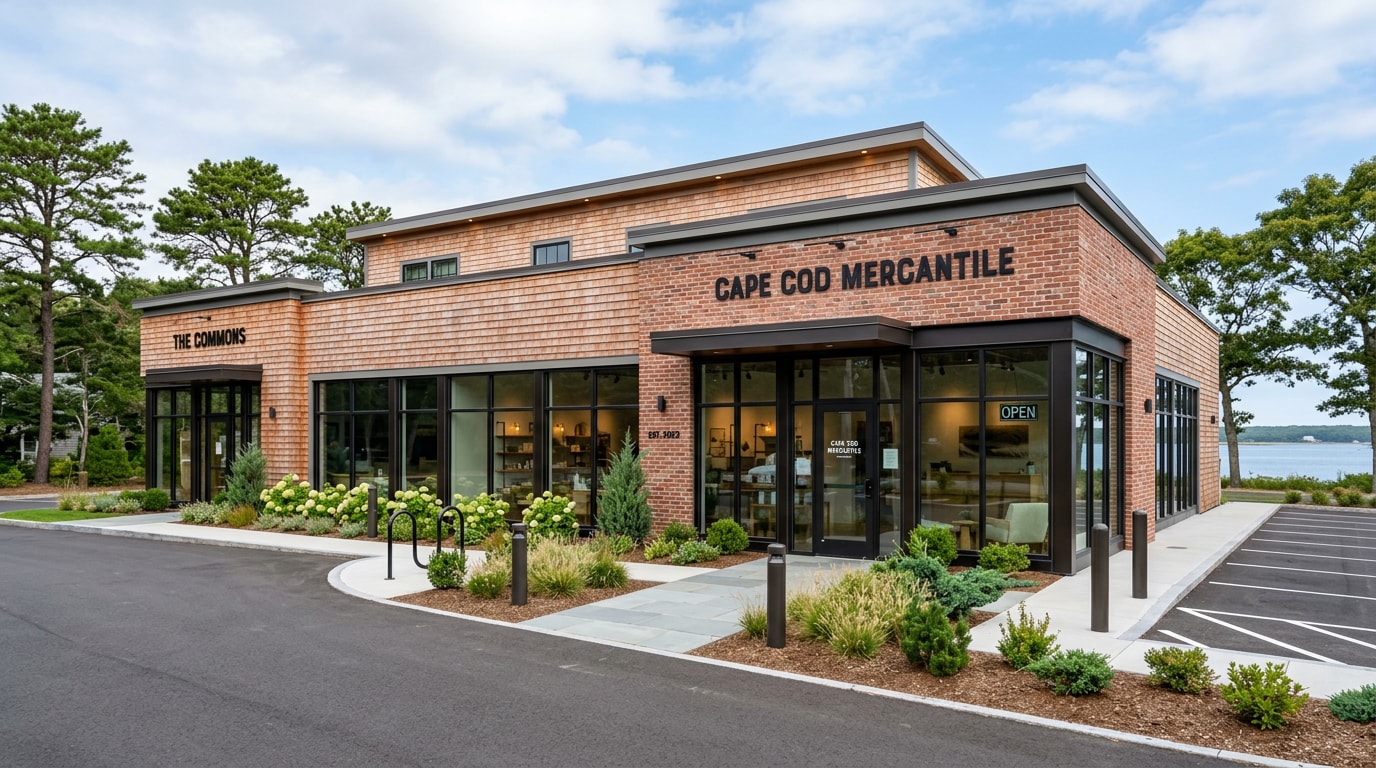
A commercial general contractor oversees construction for businesses, property owners, and institutions, not homeowners, from preconstruction planning through final inspection and occupancy. On Cape Cod, that typically means working with retail operators, landlords, facility managers, and nonprofits that need one licensed party accountable for the whole build.
The through-line across every project type is the same: one contractor, one point of responsibility, for every trade on site. That matters because commercial jobs involve more moving parts than a single-family renovation, more subcontractors, stricter documentation, and inspection schedules tied directly to occupancy.
Most firms working this market also carry trade specialties in-house rather than subbing everything out. At Javelyn Built, that includes roofing, siding, septic systems, and door installation alongside general commercial carpentry, which shortens the chain of accountability when an envelope or site-utility issue shows up mid-project.
For homeowners researching renovation options separately, the Javelyn Built homepage outlines the full range of services across both residential and commercial work.
Commercial Construction Constraints on Cape Cod
Commercial work runs under tighter operating constraints than residential projects, and those constraints shape nearly every scheduling decision a contractor makes.
Businesses need construction that respects business hours, keeps tenant access open for customers and staff, and coordinates multiple trades without shutting down operations. Compliance documentation matters just as much. Insurance certificates and safety records are things commercial property owners and government clients verify before a contract is signed, not after.
Two buyer profiles tend to drive this work on Cape Cod:
- Expansion-minded owners opening a new retail location or restaurant, where every week of delay is lost revenue.
- Compliance-driven owners in regulated spaces, where the build has to meet documented standards before an occupancy permit is issued.
| Factor | Residential GC | Commercial GC (Cape Cod) |
|---|---|---|
| Scheduling | Flexible daytime hours | Defined business-hour windows, after-hours work common |
| Access | Owner-controlled | Tenant/customer access maintained throughout |
| Insurance limits | Standard homeowner policy | Higher GL/workers' comp limits, COIs required |
| Inspection cadence | Periodic | Frequent, tied to permits and occupancy |
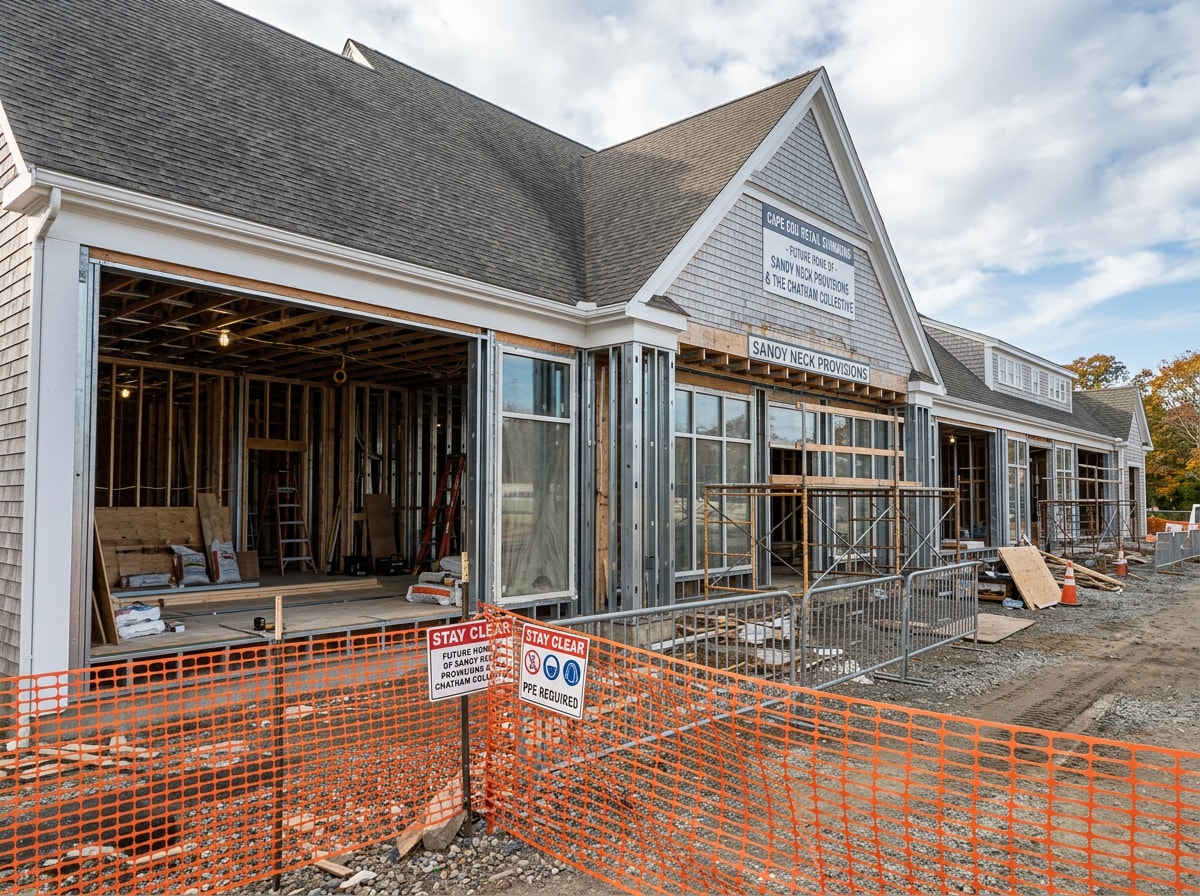
Federal jobsite safety rules for commercial work are set out in OSHA's construction standards, which provide links to OSHA Construction Standards and agency policies for enforcing those standards , covering everything from fall protection to scaffolding on active commercial sites.
Types of Commercial Construction Projects on Cape Cod
Commercial scope on Cape Cod generally falls into three categories: new construction, remodeling, and ongoing maintenance. Each carries its own timeline and planning requirements.
Ground-Up Commercial Construction
Ground-up commercial construction covers a new building from site work and foundation through framing, envelope, MEP rough-in, fit-out, finishes, and final inspections, all under one general contractor. This is the longest and most document-heavy project type, since every phase feeds into the final occupancy permit.
Timelines on Cape Cod for ground-up builds commonly run 12 to 24 weeks, depending on size, site conditions, and permitting pace.
Permit and occupancy requirements fall under the Massachusetts State Building Code, 780 CMR. As of mid-2025 this is no longer a choice between editions: the tenth edition building code became first effective on October 11, 2024 with a concurrency period during which either the ninth or tenth edition could be used, and that period ended June 30, 2025, at which point the tenth edition became the only building code in effect . Any commercial project scoped or permitted today has to follow the tenth edition, not the prior one, a detail a lot of older guides online still get wrong.
Commercial Remodeling
Commercial remodeling projects are typically project-based, running 2 to 12 weeks depending on scope. This category covers office renovation, retail refresh work, and targeted MEP updates for existing commercial spaces.
Because remodels happen inside occupied or soon-to-reopen buildings, scheduling tends to matter more than on a ground-up job, where the site starts empty. Buildings dated before 1978 add another layer: these activities can create hazardous lead dust when surfaces with lead paint, even from decades ago, are disturbed, and the rule requires workers to be certified and trained in lead-safe work practices, and requires firms to be EPA-certified . Any commercial remodel in an older Cape Cod building should confirm the contractor carries this certification before demo starts.
Commercial Maintenance
Commercial maintenance is the ongoing counterpart to construction and remodeling. It covers scheduled preventive work, reactive on-call repairs, and seasonal, climate-driven upkeep for Cape Cod facilities that need to stay operational year-round, things like roof inspections ahead of winter storms or exterior envelope checks after a hard nor'easter season.
What to Look for Before You Sign
Before signing with any contractor, ask how permitting and inspections are handled. It's the single biggest source of schedule risk on a commercial job.
Permit management. A qualified commercial contractor pulls all required permits in their own name and manages every inspector visit, so property owners rarely need to get involved directly. Commercial construction and remodeling typically require building, electrical, and plumbing permits, along with final inspections under 780 CMR.
Insurance documentation. A certificate of insurance naming specified parties should be available on short notice. Active general liability and workers' compensation coverage should carry limits that meet commercial landlord and government procurement requirements, with additional insured endorsements available on request.
Safety program. Ask whether the firm has a written OSHA-compliant safety program and, for pre-1978 buildings, current EPA lead-safe certification. Neither should require a special request; both should be standard paperwork a commercial GC hands over without being asked twice.
Scope clarity. Good inspection coordination means scheduling inspector visits around active work rather than letting them stall the job. Ask for a sample schedule from a past project of similar size.
Full-Service Construction Management
A commercial general contractor functions as the single point of responsibility for the entire project: planning and scheduling, budget oversight and cost control, subcontractor coordination, quality control and site supervision, and communication through every phase.
This matters more on commercial jobs than on a typical homeowner project, simply because there's more to coordinate. Multiple trades work in sequence, landlord and tenant schedules have to be respected, and compliance documentation has to be accurate at every milestone. Strong construction management is what keeps a multi-trade commercial job on budget and on schedule.
If your commercial scope touches the building envelope, our roofing contractor and siding contractor teams handle that work directly rather than subbing it out, which cuts down on handoff delays. Site-utility work on older Cape Cod commercial lots often runs through our septic system service crews, and tenant fit-outs frequently need our door shop for interior, exterior, or patio door work.
Service Area: Cape Cod and the South Shore
Commercial contractors active on the Cape typically serve towns including Chatham, Falmouth, Osterville, Barnstable, Harwich, Brewster, Orleans, Dennis, Wellfleet, Provincetown, Truro, Eastham, and Yarmouth. Coverage commonly extends into Barnstable County broadly and into the South Shore Massachusetts region.
Javelyn Built covers the full Cape Cod, MA service area along with South Shore towns including Kingston, Duxbury, Scituate, Marshfield, Norwell, Hingham, and Cohasset. Confirming service area upfront avoids surprises on mobilization costs for projects outside the immediate Cape Cod footprint. If you're weighing a related project type, our guide to all construction services in Duxbury, MA breaks down scope and permitting across that South Shore market.
Ready to scope a commercial project on Cape Cod? Get a free estimate to start the conversation with a licensed commercial general contractor.
FAQ
What types of commercial properties does a Cape Cod GC work on?
Commercial general contractors on Cape Cod typically work across retail spaces, offices, professional buildings, and government facilities. Each property type carries different compliance, access, and inspection needs tied to its use. Retail and office construction projects often run on tighter timelines because the business behind them loses revenue every day the space is closed.
Can you provide Certificates of Insurance to commercial property owners and landlords?
Yes. A certificate of insurance naming specified parties can typically be issued within one business day. Active general liability and workers' compensation coverage should carry limits that meet commercial landlord and government procurement requirements, with additional insured endorsements available on request.
How long does a typical Cape Cod commercial buildout take?
It depends heavily on project type. Ground-up construction generally runs 12 to 24 weeks, while remodels and tenant fit-outs typically take 2 to 12 weeks. A real estimate should come after a site walk-through, not before, since permitting pace, site conditions, and material lead times all move the number.
Can you work in occupied commercial buildings?
Yes. Working in occupied buildings is a standard part of commercial project management, not a special accommodation. Noise-window scheduling, dust containment, and phased construction are routine tools used to keep tenants and customers safe and operating.
Does the Massachusetts building code edition affect my permit timeline?
It can. The tenth edition of 780 CMR became effective October 11, 2024, with a concurrency period allowing the ninth or tenth edition, which ended June 30, 2025, making the tenth edition the only code in effect since . Any permit application submitted now is reviewed under the tenth edition, so a contractor still quoting ninth-edition assumptions is working from outdated requirements.
Do you need EPA certification for commercial remodels in older buildings?
If the building was constructed before 1978 and the work disturbs painted surfaces, yes. EPA requires that RRP projects that disturb lead-based paint in homes, child care facilities, and preschools built before 1978 be performed by lead-safe certified contractors . Ask for proof of this certification before work starts, not after.