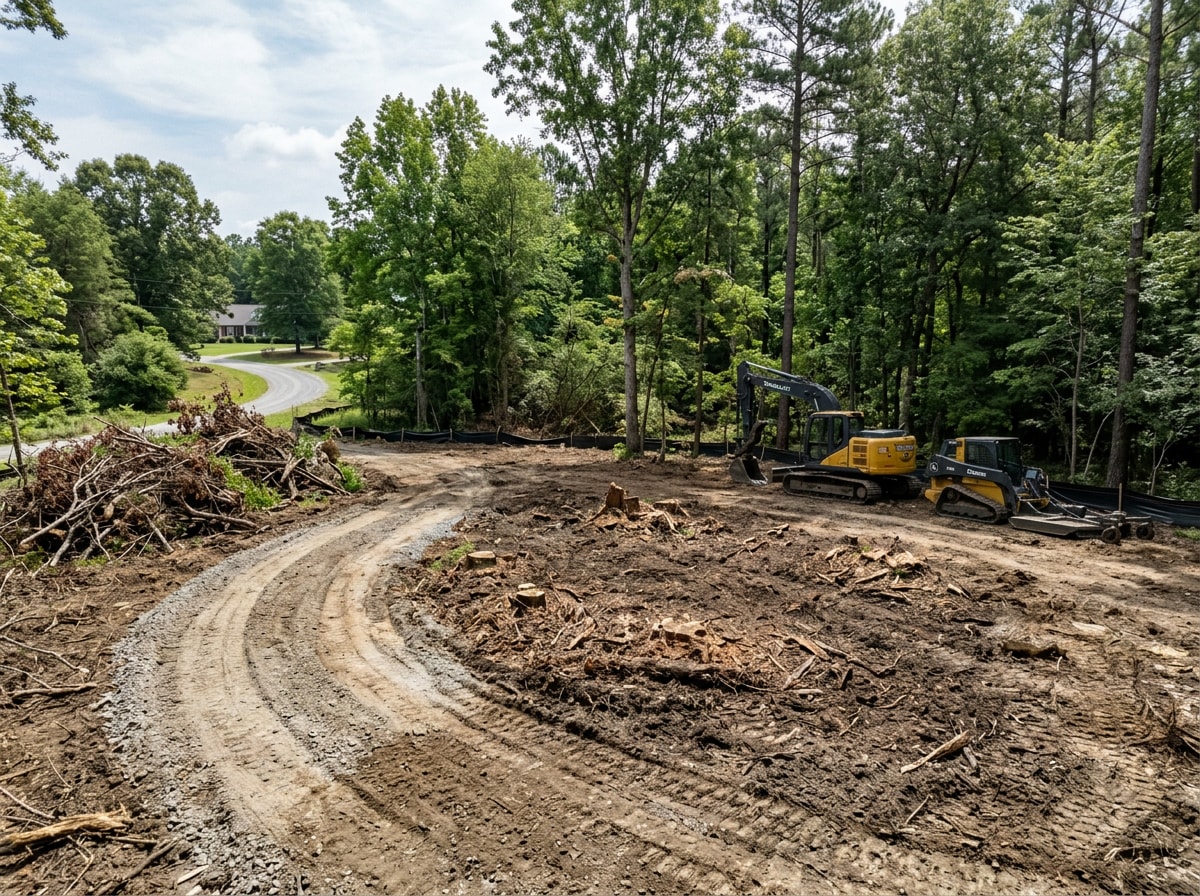
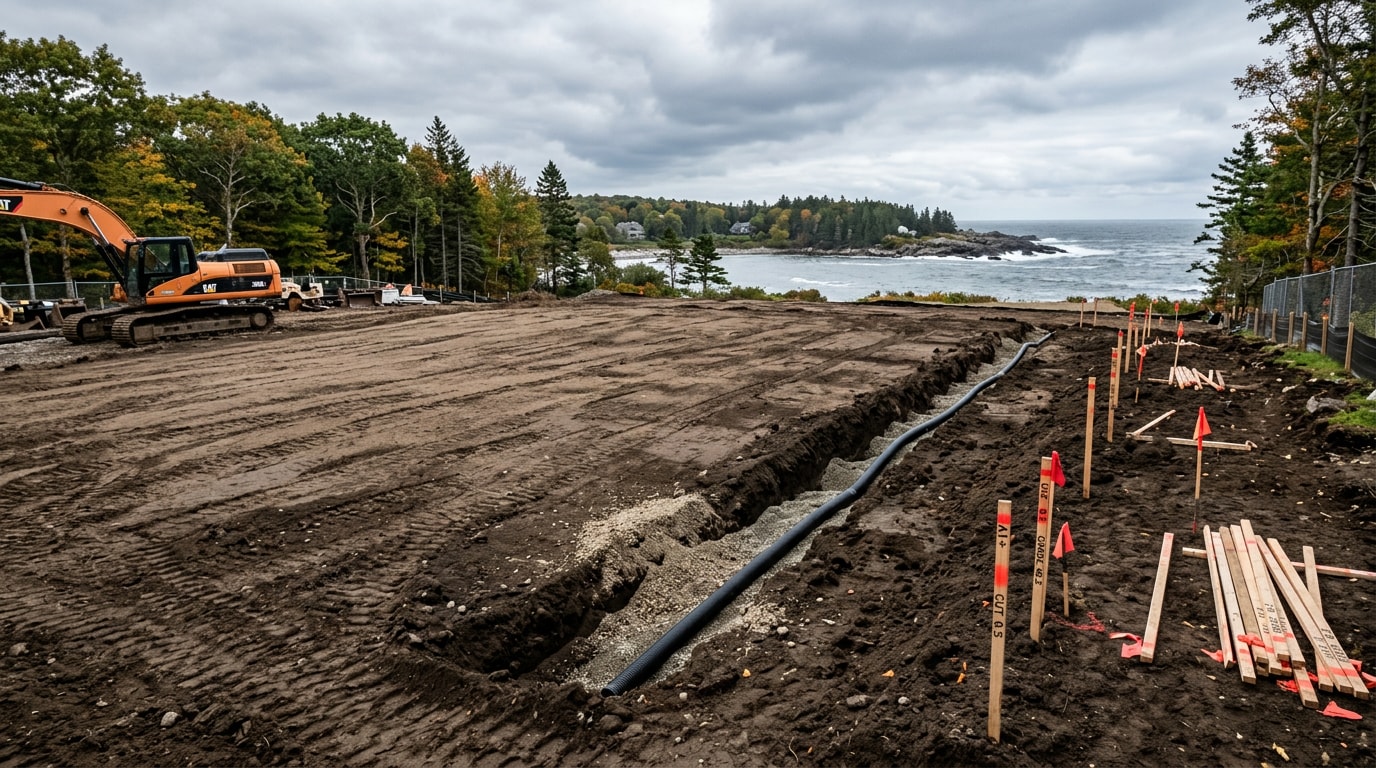
Civil works contracting in Duxbury, MA covers everything that happens to a property before a single wall goes up: clearing, excavation, grading, drainage, septic, and often a seawall. It's a broader scope than most homeowners expect, and getting it wrong is the single most common reason local projects stall at permitting. This guide breaks down exactly what's included, what it costs in time, and how to vet a contractor before you sign anything.
What Is Civil Works Contracting?
Civil works contracting is the groundwork, utilities, and site shaping that make a building project possible. It includes demolition, land clearing, excavation, grading, drainage, utility trenching, access roads, and paving.
This work applies well beyond large commercial developments. Homeowners adding a garage, developers building a subdivision, and the Town of Duxbury itself all rely on civil works contractors for site preparation. The common thread is civil engineering principles applied to real ground conditions, whether that's a half-acre residential lot or a multi-phase site development project.
We've pulled grading and septic permits through the Duxbury Conservation Commission on lots inside the flood and velocity zones along Duxbury Bay, and that review process alone can add weeks that most homeowners don't budget for up front. The sections below break the umbrella term into the services Duxbury property owners actually hire for.
Explore Javelyn Built's full range of site work services, or jump straight to our Duxbury, MA service area page for local project examples.
Site Preparation & Excavation Services
Site preparation moves through a predictable sequence: assessment, clearing, excavation and grading, then inspection before anything gets built on top.
An excavation contractor evaluates soil, drainage, and existing structures first, because Duxbury's older lots often hide ledge, old foundations, or unstable fill that wasn't an issue when the property last changed hands.
Once the site is assessed, work typically includes:
- Grading and land leveling
- Foundation excavation
- Trenching for water and sewer lines
- Drainage system installation
Many contractors now use GPS-guided grading equipment, which keeps elevations accurate within a fraction of an inch, a real advantage on sloped or tight coastal lots. New England's frost depth also shapes this phase: footings and utility lines need to sit below the frost line, which affects how deep and how carefully trenching gets done.
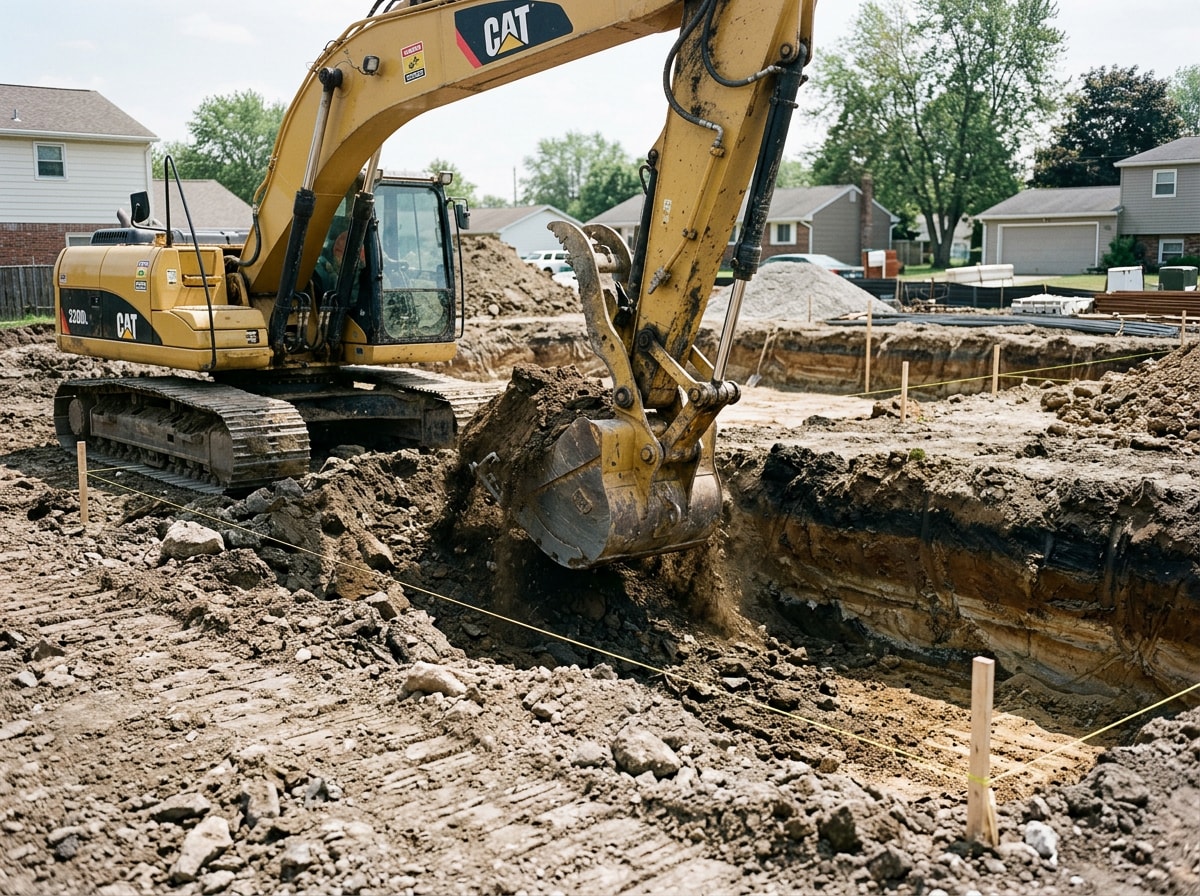
Trenching carries real safety risk, and depth thresholds are regulated for a reason. The OSHA standard for excavations, including trenches, describes the precautions needed for safe excavation work, and requires that all excavations 5 feet deep or greater use a protective system. Any contractor on your site should be able to explain which protection method they're using before a trench opens.
Land Clearing
Land clearing is usually phase one, completed before any grading or excavation begins. It covers:
- Full clearing for new construction
- Selective clearing around trees worth preserving
- Brush and vegetation removal
- Stump grinding
- Lot clearing for residential development
- Clearing access roads for equipment
Doing this correctly up front, with proper stump removal and debris handling, prevents costly surprises once grading crews arrive. If your project also involves removing an old slab, foundation, or driveway, our guide to concrete demolition contractors in Duxbury, MA walks through cost, process, and permitting for that scope specifically.
Site Development & Civil Engineering Services
Civil works isn't only physical labor. A good portion happens on paper before equipment ever arrives. This includes civil engineering review, land surveying, permitting, and site layout planning that establishes where structures, utilities, and drainage will sit.
Many civil works contractors coordinate this planning directly or work alongside a licensed civil engineer, so the excavation and grading phases match an approved site development plan rather than guesswork. Skipping this step is one of the most common reasons Duxbury projects stall at the permitting stage.
If you're still scoping your overall project, get a free estimate before finalizing blueprints. Catching site constraints early is cheaper than redesigning after a permit denial.
Septic System Installation & Sewer Tie-Ins
Many Duxbury properties rely on private septic systems rather than municipal sewer, which makes this one of the most frequently requested civil works services in town. Contractors familiar with the area understand local soil conditions, permitting steps, and environmental review tied to wetlands and groundwater.
This work generally includes:
- New septic system installation
- Replacement or upgrade of failing systems
- Site excavation and preparation
- Leach field construction
For properties connecting to municipal infrastructure instead, a sewer tie-in replaces the septic scope entirely.
Massachusetts septic systems must meet Title 5 standards, which govern design, siting, and maintenance. 310 CMR 15 is the State Environmental Code's Title 5, setting standard requirements for the siting, construction, inspection, upgrade and expansion of on-site sewage treatment and disposal systems. Any installer working on your property should be able to walk you through how your system meets those requirements.
Review our septic and site utility services, including septic system installation, septic system inspection, and ongoing septic system maintenance.
Seawall Construction & Coastal Protection
Duxbury's extensive coastline makes seawall work a genuinely local specialty rather than a generic add-on service. A well-built seawall protects waterfront property from wave impact and the gradual erosion that follows storm surges and seasonal tides.
This type of work typically pairs with excavation, grading, and drainage planning so water is managed properly on both sides of the wall. Experienced coastal contractors treat seawall work as a drainage project first and a structural project second, since trapped water behind a wall causes more long-term damage than the waves it was built to stop.
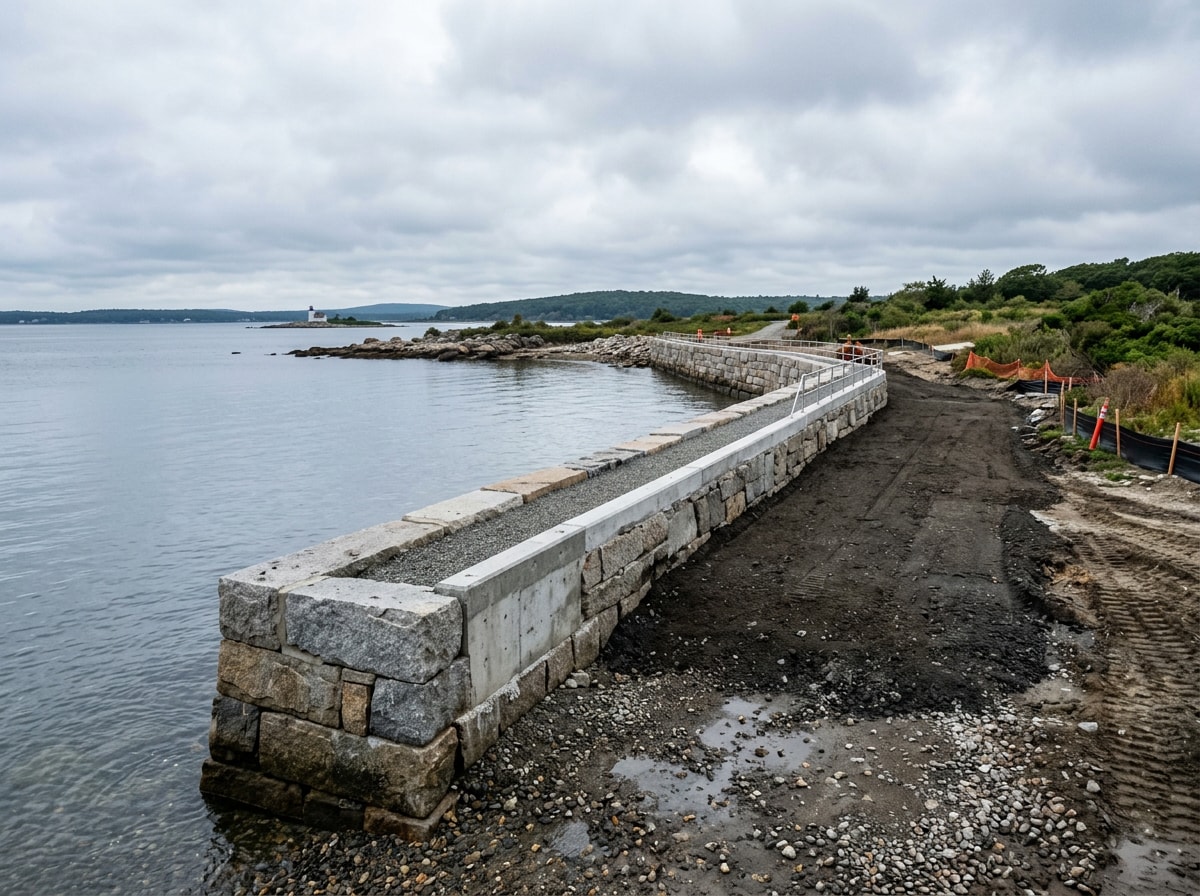
Because seawall projects sit directly in flood and wetland zones, they usually require more regulatory review than inland excavation work. The FEMA Flood Map Service Center is the official source for National Flood Insurance Program flood hazard information, and can be used to find your official flood map and FIRM panels. Checking your parcel against that map before you plan a waterfront project can save weeks of redesign later.
Typical Civil Works Project Timeline
Timelines vary by property size, soil conditions, and permitting load, but most Duxbury projects follow a similar phase structure.
| Phase | What Happens | Typical Duration |
|---|---|---|
| Permitting & civil review | Surveying, site plan review, Conservation Commission approval if near wetlands | 2-8 weeks |
| Land clearing | Brush removal, tree clearing, stump grinding | 1-3 days |
| Excavation & grading | Foundation dig, grading, drainage rough-in | 3-10 days |
| Utility trenching | Water, sewer, or septic line installation | 2-5 days |
| Septic installation | Tank, distribution box, leach field | 3-7 days |
| Seawall construction | Forming, pouring or placing, backfill | 1-3 weeks |
Larger or multi-phase commercial site developments run longer, often stretching across several months once permitting, utility coordination, and paving are included.
Challenges With Site Work in New England
Three recurring challenges separate experienced New England contractors from generalists: unpredictable subsurface conditions, freeze-thaw weather cycles, and tight site access. Each one shows up with extra intensity in a coastal town like Duxbury.
Older properties can hide buried debris, ledge, or unstable fill that only surfaces once excavation starts. Freeze-thaw cycles and heavy seasonal rain make drainage and erosion control non-negotiable, since poorly managed water undermines grading work within a single season.
Coastal lots add another layer. FEMA flood-zone mapping affects what can be built where, and the Duxbury Conservation Commission enforces wetland buffer rules near marshes and Duxbury Bay that can limit excavation setbacks.
How to Choose a Civil Works Contractor in Duxbury, MA
A few checks separate a contractor who's done this work locally from one who's learning on your project:
- Local experience. Every town enforces its own permitting quirks and soil conditions. A contractor who already knows Duxbury's conservation and flood-zone rules saves time and avoids rework.
- Licensing and insurance. Confirm both before signing anything. This protects you from liability if something goes wrong mid-project.
- Equipment and crew size. A two-person outfit with rented machinery isn't equipped for foundation excavation and septic work on the same timeline.
- Self-performed scope. A team that handles clearing, excavation, utilities, and site layout directly, rather than subcontracting each piece separately, typically means fewer scheduling gaps and clearer accountability.
You can review examples of completed site work and civil projects in our project portfolio, or see our complete breakdown of local build types in the all construction services guide for Duxbury, MA.
Why Trust This Guide
This guide was written and reviewed by the Javelyn Built team, a licensed Massachusetts construction and civil works contractor serving Duxbury, Kingston, Marshfield, and the South Shore. Our crews handle site prep, excavation, septic, and coastal construction directly rather than subcontracting the whole job out, and we've managed permitting through the Duxbury Conservation Commission on multiple waterfront lots. Questions about your specific property? Contact us and we'll walk through the scope before you commit to a plan.
FAQ
What does site preparation include?
Site preparation typically includes land clearing, grading, foundation excavation, trenching for utilities, and preparing the site for construction or infrastructure installation. It's the groundwork phase that happens before any structure goes up, and it directly affects drainage and stability later.
How long does an excavation or site work project take?
Timelines depend on property size, soil conditions, weather, and overall project scope. A smaller residential excavation might take just a few days, while larger commercial or municipal site work often requires weeks of scheduling across multiple phases.
What equipment is used for excavation and site work?
Typical equipment includes excavators, loaders, compactors, and grading machinery. Many contractors now use GPS-guided grading systems, which improve accuracy on sloped or irregular lots and reduce the need for manual rework.
Do I need a permit for excavation or site work in Massachusetts?
Most grading, drainage, foundation, and utility-trenching work requires local permits in Massachusetts. Any project touching buried utility lines also requires a Dig Safe request before digging begins. State law requires you to wait the full advance notice requirement of 72 hours in Massachusetts before digging. A qualified contractor typically manages this process as part of the job.
What's the difference between civil works contracting and general contracting?
Civil works contracting covers site-level work, grading, excavation, drainage, utilities, and septic, that happens outside and below the structure. General contracting covers the building itself. Many projects need both, often from the same team to avoid scheduling gaps between site work and construction.
Does seawall or waterfront work require extra permitting?
Yes. Seawall, bulkhead, and other waterfront work in Duxbury typically triggers Conservation Commission review and state wetlands regulations in addition to standard building permits, since the work sits inside flood and tidal buffer zones.